FIT
How to Find Your Actual Hat Size
Hat sizing carries a strange amount of confusion for something that comes down to a single number. Part of that is the number of competing systems, and part is that adjustable closures let a lot of badly sized hats pass as wearable. They fit in the sense that they stay on. They do not fit in the sense that you forget you are wearing one.
Here is the whole method.
Take the Measurement
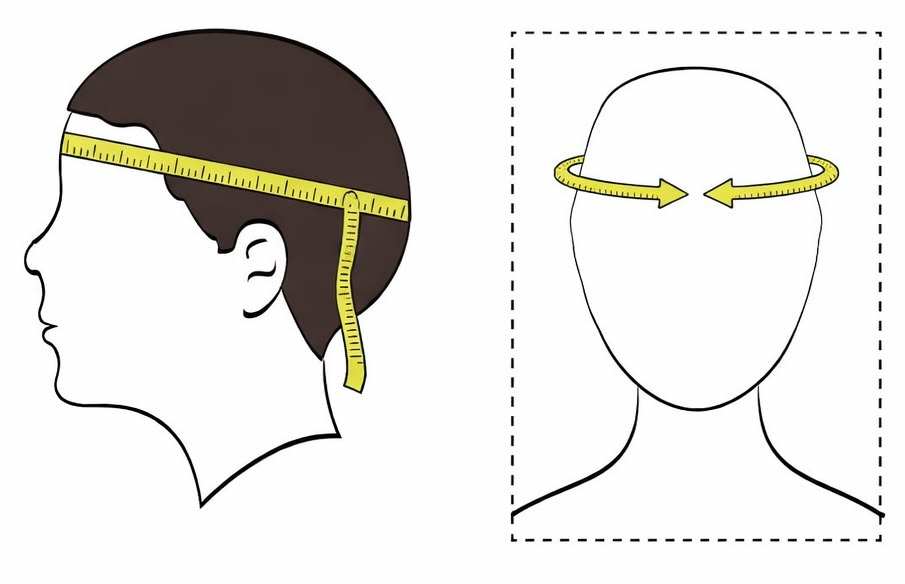
Use a soft tape measure. Wrap it around your head where a hat actually sits: across the middle of the forehead, roughly a finger's width above the eyebrows, and around just above the ears at the back. Keep it level all the way around, which is easier in front of a mirror.
Pull it snug but not tight. Snug means the tape stays put when you let go of the loose end, not that it presses into the skin. Take it twice and use the larger number, because the first attempt is usually pulled tighter than you would ever want a hat to be.
If you have no tape measure, a length of string against a ruler works fine.
Match the Number to the Listing
That circumference in inches or centimeters is your size. Match it to the range on the listing rather than to a letter, because a medium in one construction is not a medium in another and the range is the fact underneath the letter.
When your measurement falls right on the line between two sizes, go up rather than down on a fitted style. A hat slightly loose can be lived with; a hat slightly tight produces a headache by mid-afternoon and stops getting worn.
Crown Depth Is the Measurement Nobody Takes
Circumference tells you whether a hat goes around your head. Crown depth tells you how far down it comes, measured from the sweatband seam to the button at the top. Two caps with identical circumference can sit an inch apart on the same head.
A crown too shallow perches rather than sits, lifts at the back, and blows off in wind. A crown too deep swallows the ears and pushes the brim down over your field of view. If a hat you own fits well, measure its depth from the inside and you have a second number to match against.
Closure Types and What They Actually Solve
An adjustable strap covers a span of sizes, which is genuinely useful and is why so much headwear uses one. What it cannot fix is crown depth, so an adjustable hat with the wrong depth is still the wrong hat.
A fitted style has no adjustment at all, so the measurement has to be right, and in exchange it sits cleanly with no strap hardware at the back. A stretch-fit band splits the difference: one size covers a range by stretching, at the cost of gradually relaxing over a couple of years of wear.
How Beanie Fit Works Differently
A beanie stretches, so circumference matters far less. What matters is the length of the tube and the depth of the cuff, which together decide where it sits relative to your ears and how much slack gathers at the back.
If you want your ears covered, you need enough length below the cuff to reach them, and that is a specification worth checking rather than assuming. A beanie that stops short of the ears is a style choice, and an unwelcome one in February.
Checking Fit When It Arrives
Put the hat on indoors and leave it there for a few minutes. It should sit level without being pushed, stay put when you look down, and leave no red line on your forehead when you take it off. A faint line that fades in seconds is normal. One that lasts means the size is too small regardless of what the number said.
Trying a hat on indoors does not affect your return eligibility, which is exactly what the window is for. The terms are on our Return & Refund Policy, and a prepaid label reaches your inbox within a business day if the answer turns out to be no.
Thank you for shopping with us, and for keeping a good hat in regular rotation.